Therians vs. Furries: Understanding the Deep Animal Connection and Quadrobics
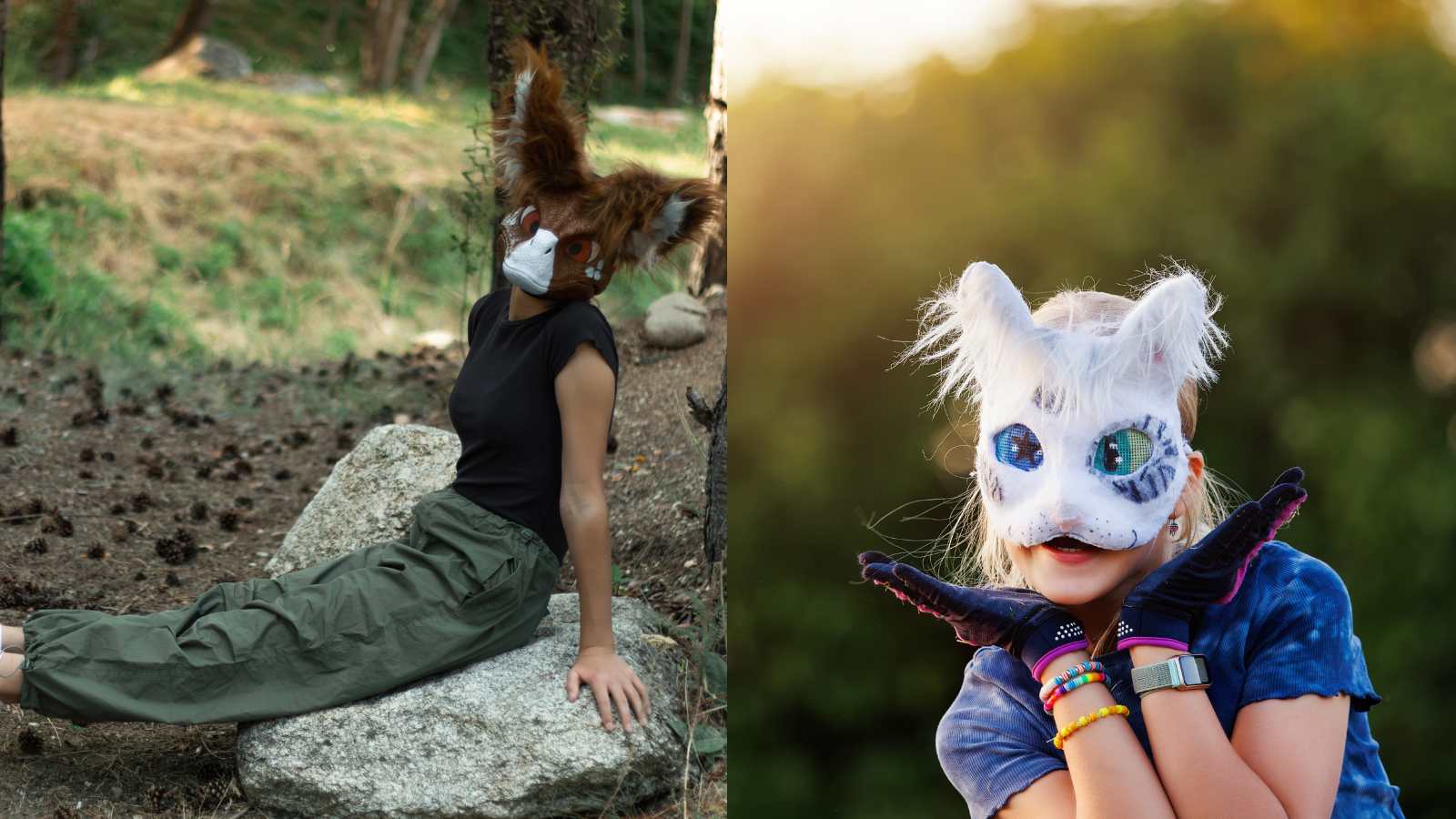
In public parks, open fields, and bustling social media feeds, a captivating and sometimes puzzling phenomenon is gaining traction: individuals adorned with animal masks moving gracefully on all fours, leaping over makeshift obstacles, and vocalizing sounds reminiscent of wolves, felines, or various other creatures. Videos of these encounters, shared millions of times across platforms like TikTok and Instagram, have thrust the community known as Therians into the spotlight, sparking widespread discussion about identity, digital culture, and the fundamental human need for belonging. While initially appearing to some as a mere trend or playful eccentricity, the world of Therians is far more intricate, deeply rooted in philosophical, psychological, and cultural concepts that warrant understanding.
At the heart of this growing interest lies a critical distinction often confused by outsiders: the difference between Therians and Furries. Though both communities share a profound appreciation for animals and animalistic expression, their core motivations and self-identifications diverge significantly. Understanding this fundamental separation is key to appreciating the depth and sincerity of each unique path.
Therians Que Son: Exploring the Core Identity
The term "Therian" originates from the ancient Greek word therion, meaning "beast," and is intrinsically linked to the concept of therianthropy. This ancient idea, prevalent in mythologies and folklore across diverse cultures, speaks to the fusion or shared essence between humans and animals. However, the contemporary understanding of what Therians Que Son began to coalesce in the 1990s within early digital forums. Here, individuals started to articulate an inner truth: a felt identity that wasn't entirely human, but rather deeply connected to, or even inherently, an animal spirit or essence.
For a Therian, this isn't a hobby, a performance, or a costume. It is a fundamental, involuntary aspect of their being. They don't merely enjoy or admire animals; they perceive their internal self, on a spiritual or psychological level, as an animal. This profound connection is often referred to as their "theriotype" – the specific animal species they identify with internally. A theriotype can be virtually any animal, from a majestic wolf or a cunning fox to a graceful cat, a soaring bird, or even an ancient dinosaur. It's crucial to note that this identification is internal; Therians do not believe they are physically transforming into an animal, nor do they lose sight of their human form. Instead, it's an intrinsic sense of self, influencing their instincts, personality, and even their emotional landscape.
The "Awakening" and Sensory Experiences
Many Therians describe a pivotal moment in their lives known as "the awakening." This is a deeply personal revelation where they come to understand and accept their animalistic identity. For some, it's a sudden, profound realization; for others, it's a gradual unfolding of self-awareness. Accompanying this awakening, or sometimes preceding it, are often vivid sensory memories or experiences that don't align with their human life. These might include the visceral sensation of running through a dense forest, the primal urge of a hunt, or the acute awareness of scents and sounds in a way that feels distinctly non-human. These experiences are interpreted by Therians as symbolic manifestations of their true identity or even echoes of past lives, offering profound validation of their internal truth.
The Crucial Distinction: Therians vs. Furries
While both communities share a visible appreciation for animal forms, the core difference between Therians and Furries lies in the nature of their connection. This distinction is paramount for genuine understanding:
- Furries: The furry fandom is primarily an artistic, aesthetic, and recreational community. Furries express their admiration for anthropomorphic animal characters through various creative outlets, including art, writing, and performance. They often create "fursonas," which are animal characters that represent them, and may wear elaborate costumes called "fursuits" to embody these characters at conventions or social gatherings. For Furries, their involvement is a choice, a hobby, a social activity, and a form of creative expression. They understand their fursona is a character, separate from their core human identity.
- Therians: In contrast, Therians experience their animal identity as an involuntary, inherent part of who they are, not a character or a costume. Their connection is spiritual or psychological, a deep-seated truth about their internal self. The masks and movements seen in public are not merely dress-up; they are a means of aligning their external expression with their internal reality, a way to physically manifest their theriotype and experience authenticity. This is their identity, not a role they play.
Confusing the two can be dismissive of the deep, personal journey many Therians undergo. While there can be some overlap in membership (an individual might identify as a Therian and also enjoy aspects of the furry fandom), the fundamental reasoning and experience of identity are distinct.
Embracing the Inner Animal: The Practice of Quadrobics
One of the most visually striking and widely recognized practices within the Therian community is quadrobics (sometimes called quadratropía). This involves moving and navigating spaces on all fours, mimicking the natural locomotion of their theriotype or other animals. More than just a symbolic gesture, quadrobics is a physically demanding discipline that requires significant training, coordination, strength, and agility. For those who practice it, quadrobics is a profound way to connect their physical body with their internal animal identity.
During these sessions, which are frequently organized and shared via social media, participants might not only engage in quadrobics but also interact in other animalistic ways: smelling objects with heightened awareness, emitting animal sounds, or engaging in playful, instinctive interactions with fellow Therians. From an external perspective, these activities might resemble a form of role-play. However, for Therians, it is a genuine expression of their authentic selves, a way to live out and embody their deepest identity in a tangible, physical manner.
Tips for Understanding Quadrobics:
- Physicality: Recognize that it's a strenuous form of exercise. Many Therians train rigorously to improve their technique, endurance, and safety.
- Authenticity: For practitioners, it's not about being "silly" or "performing." It's a deeply personal practice of self-expression and identity alignment.
- Safety First: Like any physical activity, quadrobics carries risks. Practitioners often prioritize safe environments and proper technique to prevent injury.
The Digital Amplifier and Societal Response
The journey of Therians from niche digital forums to mainstream public visibility is largely attributable to the amplifying power of social media. Without platforms like TikTok, Instagram, and YouTube, the phenomenon might have remained relatively marginal. These digital spaces have not only provided Therians with unparalleled visibility but have also fostered a sense of community, allowing individuals worldwide to connect, share experiences, and find validation.
The shift from private online discussions to public displays in parks and urban spaces is a critical element in understanding the intense debate and curiosity surrounding Therians. This public emergence challenges societal norms and prompts questions about identity, self-expression, and acceptance in an increasingly diverse world. While some reactions are supportive and curious, others range from confusion and ridicule to outright negativity. It's in this climate that informed understanding becomes paramount.
The existence of Therians highlights a broader human inclination to explore and define identity beyond conventional boundaries. It speaks to a deep longing for authenticity, a connection to nature, and the freedom to express one's true self in a world that often pressures conformity. Approaching the phenomenon with an open mind, rooted in curiosity rather than judgment, allows for a richer appreciation of this unique and evolving aspect of human experience.
Conclusion
The world of Therians, characterized by a profound, involuntary animal identity and practices like quadrobics, offers a compelling insight into the complexities of human self-perception. Distinct from the artistic and recreational expression of the furry fandom, being a Therian involves a deep, often spiritual or psychological connection to an internal animal self, or theriotype. As this community gains visibility through digital platforms and public expression, understanding the nuances of their identity – what Therians Que Son and why their practices hold such significance – is crucial. It reminds us that identity is multifaceted, and that for some, the truest sense of self lies in the heart of the wild, within the spirit of an animal.